
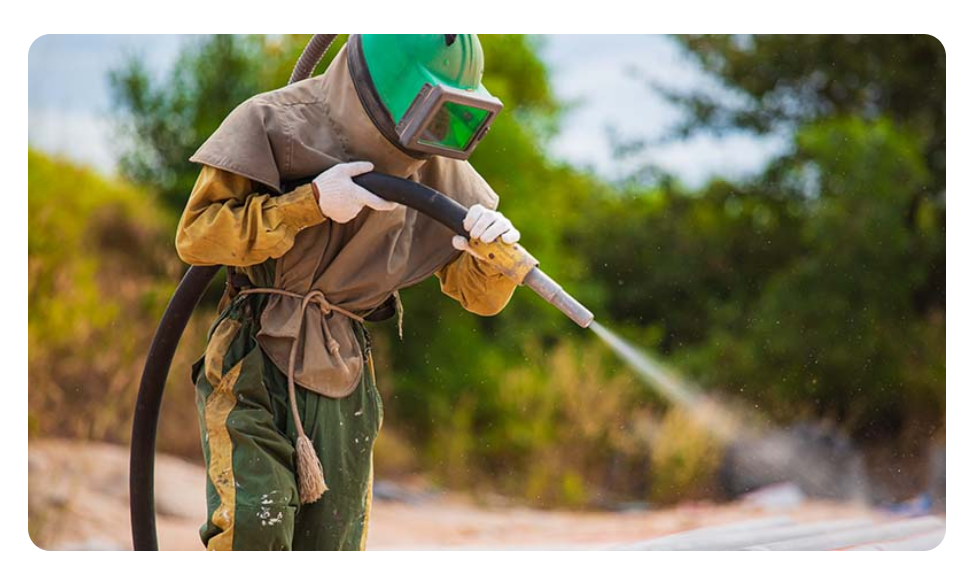
Media blasting—whether sandblasting, abrasive blasting, or shot blasting—relies on one core component above all others: a dependable supply of high-volume, high-pressure compressed air. In the field, mobile and portable air compressors are the backbone of these operations, powering blasting pots, metering systems, and nozzles to deliver the velocity required to clean, strip, or profile surfaces.
From industrial coatings to construction equipment restoration, mobile compressors in the 375 CFM, 750 CFM, and 1600 CFM classes are the most common units powering abrasive blasting jobs. Here’s a closer look at how each size fits the application, the PSI requirements involved, and the supporting equipment needed for a complete blasting setup.
Choosing the Right Air Compressor for Media Blasting
375 CFM Compressors (Typical 150 PSI)
375 CFM units are widely used for light-to-medium blasting applications, such as:- Structural steel prep
- Small equipment refurbishing
- Graffiti removal
- Concrete surface profiling
750 CFM Compressors (150–200 PSI)
Stepping up to 750 CFM brings significantly more power and airflow, allowing:- Larger nozzles (#8–#10)
- Longer hose runs
- Heavier abrasives
- Faster production rates
1600 CFM Compressors (150–200+ PSI)
For major industrial operations, nothing beats the airflow of a 1600 CFM compressor. These machines support:- Massive nozzles (#10–#12)
- Very long hose runs
- Multi-operator blasting
- Heavy-duty abrasives like steel grit or coal slag
Understanding PSI Requirements in Blasting
The ideal PSI depends on surface hardness, media type, and nozzle size. General guidelines:- 90–110 PSI: Minimum for effective abrasive blasting
- 120–150 PSI: Ideal for most commercial applications
- 150–200+ PSI: Required for heavy blasting, steel grit, and large nozzles
Essential Equipment for a Complete Blasting Setup
A compressor alone is not enough. A safe and efficient blasting operation requires several key components:1. Blasting Pots (Blast Machines)
The blasting pot (or pressure vessel) stores and meters abrasive media. Key features:- Pressurized tank (1–6.5 cu. ft. typical sizes)
- Abrasive metering valve
- Moisture trap or air dryer
- Deadman safety controls
2. Blast Hoses
High-quality, heavy-wall blast hose is required to handle abrasive flow and pressure. Proper sizing is essential:- Too small → pressure loss
- Too large → wasted air volume
3. Nozzles
The nozzle determines your blasting speed and air demand. Common types:- Venturi nozzles (most efficient)
- Long-venturi for maximum velocity
- Straight-bore for tight areas
4. Air Dryers / Aftercoolers
Moisture is the enemy of blasting. Wet air causes:- Media clumping
- Hose blockages
- Inconsistent flow
5. Personal Protective Equipment (PPE)
Abrasive blasting requires specialized PPE, including:- Fed air blasting helmet
- Protective suit
- Heavy-duty gloves
- Respiratory air filtration
Conclusion
Mobile and portable air compressors are the heartbeat of the media blasting industry. Whether using a 375 CFM, 750 CFM, or 1600 CFM compressor, matching airflow and PSI to your nozzle and application ensures the productivity, consistency, and safety today’s projects demand. With the right compressor—and the proper blasting equipment—contractors can tackle everything from small restoration projects to large industrial surface preparation with confidence.Power Trade X Insight & Capabilities
At Power Trade X, we support the blasting industry by supplying reliable, inspected, and work-ready mobile air compressors for any scale of operation. Whether you need a 375, 750, or 1600 CFM unit, our inventory includes new and used compressors, fully evaluated and ready for jobsite or rental fleet deployment. We also offer:- Consignment options for sellers
- Expert guidance on compressor sizing and application
- Inventory updated weekly at www.powertradex.com
- A business philosophy built around our slogan: “Powering Your Success.”