
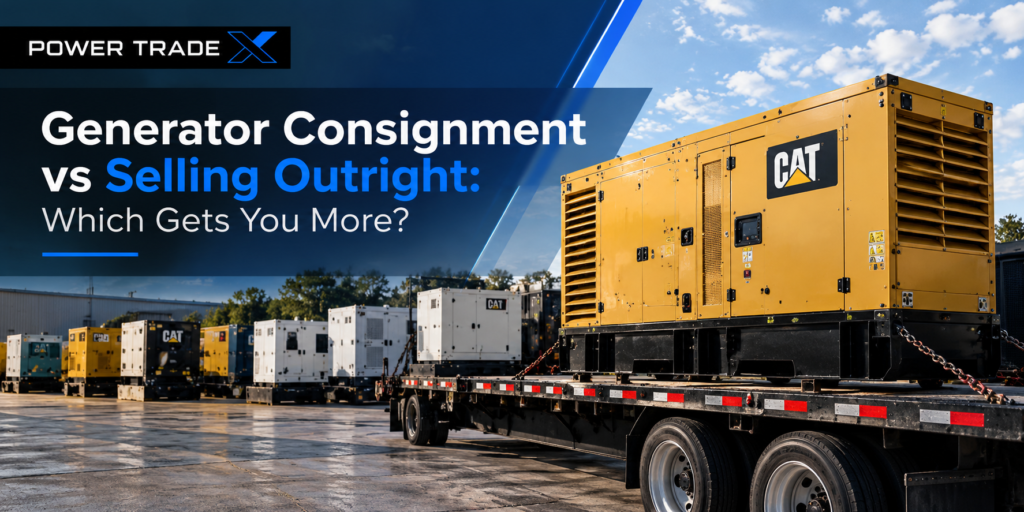
If you have a generator or a fleet of generators to sell, you have two primary options: take a direct offer and walk away with cash today, or consign through a broker who markets the unit and pays you when it sells. The right choice depends on your timeline, your price expectations, and how much involvement you want in the process.
This guide walks through both options honestly, including what you can realistically expect to net from each, so you can make the decision that fits your situation.
What Does “Outright Sale” Mean?
An outright sale means a buyer or broker purchases your generator directly from you for an agreed price. You receive payment, typically within a few business days, and the transaction is complete. The buyer takes ownership of the unit and assumes all responsibility for marketing, resale, and any subsequent costs.
The advantage is speed and certainty. You know exactly what you are receiving and when you will receive it. The disadvantage is that buyers purchasing for outright resale discount their offers significantly to account for their own margin, storage costs, marketing expenses, and the time it will take them to sell the unit. That discount is the spread between what the equipment is worth to the end buyer and what you will accept today.
What Does Consignment Mean?
Consignment means you retain ownership of the generator while a broker markets and sells it on your behalf. The broker handles all buyer inquiries, negotiations, inspections, and transaction logistics. When the unit sells, the broker takes a commission, typically 10–20% of the sale price, and forwards the remainder to you.
The advantage is that you receive a price closer to the actual market value rather than a discounted wholesale offer. The disadvantage is time. You do not receive payment until the unit sells, and in a soft market, that can take weeks or months.
The Real Number Difference
Here is how the math typically plays out for a used industrial generator with a market value of $60,000:
| Specification | Detail |
| Outright sale to a broker | 36,000–45,000 (60–75% of market value) |
| Consignment sale | 48,000–54,000 (80–90% of market value, after 10–20% commission) |
| Difference | 6,000–18,000 in favor of consignment |
The gap is real and significant. On higher-value units, such as 500kW, 1MW, or multi-unit fleets, the difference between outright and consignment can run into tens of thousands of dollars.
That said, these numbers only hold if the consignment broker has the buyer network to move the unit at or near market value. A broker who cannot reach qualified industrial buyers is not worth waiting for regardless of their commission structure.
When Outright Sale Makes More Sense
You Need Cash Immediately
If you have a fleet rotation with debt service attached to the equipment being replaced, a tax deadline that requires the asset to be off the books, or a business liquidity need, waiting for a consignment sale may not be an option. An outright sale converts the asset to cash now. The discount you accept is the cost of certainty and speed.
The Unit Is Hard to Move
Some generators are difficult to consign effectively, including high-voltage output configurations with a limited buyer pool, unusual fuel systems, or units in poor condition that require significant work before they are marketable. An outright offer in this situation may be the most practical outcome, even if it reflects a heavy discount.
Storage Is Costing You Money
Every month a generator sits unsold costs you yard space, insurance, and, in some cases, depreciation as the market moves. If you are paying storage costs on a unit you are trying to sell, the carrying cost erodes the consignment advantage. Run the math on monthly carrying cost versus the price gap between outright and consignment.
When Consignment Makes More Sense
You Have a Quality Unit in a Common Configuration
A 200–500kW diesel generator from a major brand, such as Caterpillar, Cummins, Kohler, or Multiquip, in a standard 480V configuration with documented service history is the type of unit that moves in consignment. There are active buyers in this market, and a competent broker with good buyer relationships can typically sell a well-documented unit in 30–60 days.
You Have Multiple Units
Fleet liquidations consistently perform better through consignment than through bulk outright sale. Selling seven generators at $50,000 each through consignment nets significantly more than accepting a bulk offer of $210,000 for all seven. Power Trade X has sold seven-unit fleet consignments within 30 days with funds deposited after each individual closing. That is not marketing. It is the documented outcome of having the right buyer relationships.
You Can Be Patient
If your timeline allows 30–90 days and you want to maximize what you receive, consignment is almost always the better choice for a quality unit. The additional revenue typically outweighs the wait by a meaningful margin.
What to Ask Any Consignment Broker Before You Sign
- Who are your active buyers? A good broker can name the types of buyers in their network, including rental companies, data center operators, and construction fleet managers. If the answer is vague, their buyer network may be too limited.
- How long does it typically take to sell a unit like mine? Ask for examples, not estimates. If a broker has sold similar units, they can tell you specifically.
- What is your commission structure? Understand exactly what percentage they take and whether there are any fees or deductions beyond the commission.
- Who handles inspections and load-bank testing? If a buyer wants a load-bank test before purchase, who coordinates and pays for it? This should be clear in the consignment agreement.
- What happens if it does not sell? Understand the exit clause. Can you pull the unit out of consignment if you receive a direct offer or decide to keep the equipment?
Power Trade X Consignment Program
Power Trade X buys generators and air compressors directly, and we also offer a consignment program for sellers who want market value rather than a quick offer. We have an active buyer network of rental fleet operators, data center managers, construction companies, and industrial equipment dealers across North America.
If you have a single unit or a fleet to move, contact us with the details, including make, model, year, hours, and current location, and we will tell you honestly whether outright purchase or consignment is the better path for your equipment.
We buy, sell, consign, and source diesel generators and air compressors nationwide. Call 888-769-3780 or visit powertradex.com.
FAQs
-
How does generator consignment work when selling industrial equipment?
Generator consignment allows you to sell your equipment through a broker without selling it to them upfront. You retain ownership while the broker markets the generator, connects with potential buyers, and helps manage negotiations and inspections. Once the generator sells, the broker deducts the agreed commission and pays you the remaining amount according to the consignment agreement.
-
How much commission do generator consignment companies charge?
Generator consignment companies typically charge a commission of around 10% to 20% of the final sale price, although rates vary by broker, equipment value, and services provided. Before signing an agreement, ask whether transportation, storage, inspections, or load-bank testing involve additional fees. Comparing the expected net payout is more useful than looking at the commission percentage alone.
-
How long does it take to sell a generator through consignment?
The selling timeline depends on the generator’s brand, power rating, condition, asking price, and demand in the used equipment market. A popular 200kW to 500kW diesel generator with complete service records may sell within 30 to 60 days, while specialized or high-voltage units can take longer. Ask your broker about recent sales of comparable equipment before setting your expectations.
-
Can I sell my generator outright instead of using a consignment broker?
Yes. An outright generator sale means a buyer purchases the equipment directly from you for an agreed price. This option is useful if you need quick payment, want to clear storage space, or prefer a straightforward transaction. Consignment may bring a higher net return, but an outright offer can make more sense when speed and certainty matter most.
-
How can I get the best resale value for my used diesel generator?
Start by gathering the generator’s make, model, year, operating hours, and maintenance records. A recent load-bank test, clear equipment photos, and an accurate description of its condition can help attract serious buyers. Before accepting an offer, compare an outright purchase price with the estimated consignment payout after commission and other costs. This gives you a clearer picture of which option offers the better return.